
Dating in the 419
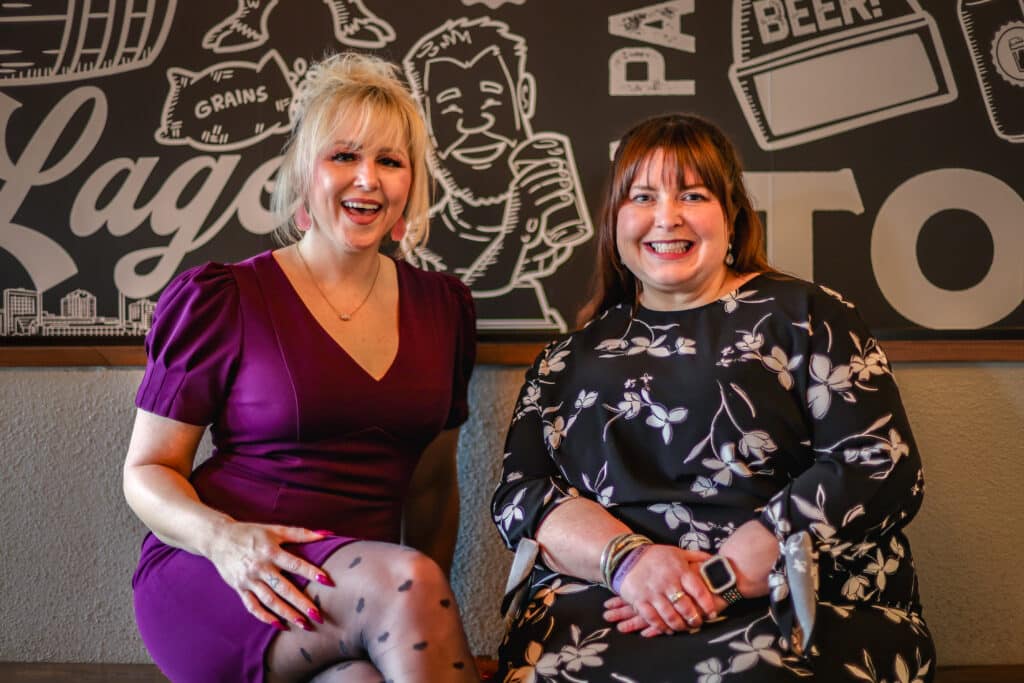
With just an Alani Nu in my system, I picked up Kelly Fischer at around 4:30 p.m. on Valentine’s Day 2026. We headed to Inside the Five’s Fifth Floor, a modern-yet-rustic private room, to execute “The Grown-Ups Table”—a one-night-only affair for singles between the ages of 30 and 60 in the Toledo, Ohio, region. Arriving an hour early in hopes of eating, we found the restaurant full of patrons and our dinner dreams dashed.
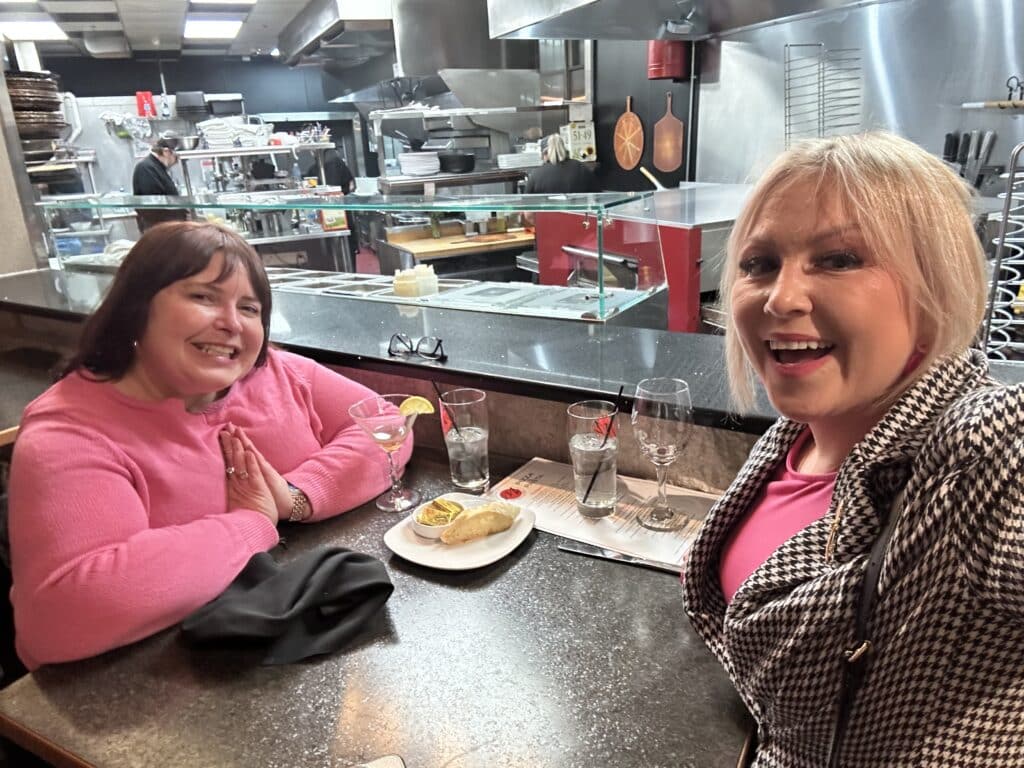
The seeds for this “caffeinated panic” weren’t planted in a boardroom, but in the stands of a Toledo Walleye game. As a season ticket holder, Fischer frequently invited me to join her. The contrast between our inspiration and our execution was stark. At a Walleye game, the atmosphere is a sensory assault: the biting chill of the ice rink, the sharp smell of stadium popcorn, and the deafening horn that follows a goal. It is a place of loud, collective energy, but for two single women in their 40s, it isn’t necessarily a place for intimate connection. Between the goals and the crowd noise, our conversations often drifted to the state of our social lives. We found ourselves in a cultural no-man’s-land: we felt aged out of the pulsing, late-night nightclubs, yet we were deeply dissatisfied with the exhausting experience of online dating. That was when Fischer’s wild idea struck: What if we stopped looking for the perfect night and simply built it ourselves?
Our personal fatigue mirrors a broader collapse of American social infrastructure. According to the American Survey Center’s report, “Disconnected: Places and Spaces,” the “third places” that once anchored communities are thinning out. Their data reveals that 63% of Americans report “never” or “seldom” visiting a library in the past 12 months, and just 17% report visiting at least once or twice a month. As these traditional gathering spots fade, “The Grown-Ups Table” wasn’t just a party—it was a necessary response to a nationwide loneliness epidemic. We were building a temporary library of human experience in the middle of a brewery.
As an entrepreneur, I help other entrepreneurs bring their ideas to life digitally. So when Fischer suggested a singles night, I didn’t flinch. “I’ve learned what to joke about around you,” Fischer said, laughing as we dropped off flyers to coffee shops and gyms. She quickly realized that a casual suggestion would, in my hands, turn into a full-scale marketing brainstorm. We began questioning if two single professionals in their 40s could actually mobilize a demographic that was collectively sick of swiping. To bridge the gap between my marketing instincts and Fischer’s vision, we consulted Gemini, an AI tool by Google, to brainstorm everything from our business name to logistical hurdles.
While I managed the digital rollout, Fischer stepped into a role she has mastered for over 20 years as a Controller for Research Metrics. For our new venture, The Kel² Collective, she was the final word on every financial decision, from reviewing the Fifth Floor contract with Inside the Five to managing the balance sheets for our initial overhead. She approved or denied every purchase—from the silk organza bags for party favors to the neon wristbands that served as the night’s social shorthand.
The Strategy of the Village
Fischer’s approach to the venue was as much about community as it was about numbers. “The choice of Inside the Five’s Fifth Floor was a calculated move in urban synergy,” Fischer explained. “For a brewery, a Saturday night event—especially one falling on Valentine’s Day—is typically flooded with couples. By pitching a high-concept singles event, we offered the venue a way to monetize their space. The contract negotiation wasn’t just about a room rental; it was a partnership that leveraged their existing brand to elevate our ‘Grown-Ups’ aesthetic.”
Our pricing model added another layer of social engineering. “We introduced the ‘Wingman Ticket’—a discounted 2-for-$70 deal—specifically to lower the barrier to entry,” Fischer noted. “We recognized that for many in the 30-60 demographic, walking into a room of strangers alone is the primary deterrent to socializing. By incentivizing guests to bring a friend, we ensured that every attendee had a ‘safety net.’ This data-backed approach transformed a potential social anxiety into a marketing incentive that drove 40% of our total ticket sales.”
The Media Snowball
Networking through a local Toledo chapter of Toastmasters International provided our first major win: securing Vince Croci as our Master of Ceremonies. An Executive Screening Solutions Specialist by day, Croci refers to his professional emceeing as his “fill-time”—having previously steered the Garmin marathon in Toledo in Sept. 2025—and he didn’t hesitate when we pitched the “Grown-Ups Table.” His confirmation acted as a catalyst for a whirlwind of media attention.
To manage the “Great Offline” influx, we needed a digital entryway that understood the local landscape. Our first official partnership was with Eventpin, a platform created by Toledo native Derek Whitaker. Serving as a centralized hub for regional events, Eventpin became our primary engine for visibility, promoting “The Grown-Ups Table” as the definitive dating event in town. This collaboration was a strategic choice in local reinvestment; while national ticketing giants offer scale, Whitaker’s platform offered community-specific reach. It provided the technological backbone for our registration process in conjunction with Ticket Tailor, ensuring that the transition from a digital QR code to a physical wristband was seamless for our 50 guests.
Our digital strategy found its first analog voice on Jan. 26, when we sat down with Eric Chase, a DJ for Q105 Toledo. Chase invited us onto his podcast to discuss the increasingly complex landscape of “Dating in the 419.” While our social media ads reached the phones of our audience, the conversation with Chase reached them in their cars and kitchens. This was our first true layer of local legitimacy. By articulating our mission on a trusted platform, we weren’t just two entrepreneurs with a flyer; we were community voices being vetted by a local authority. That interview provided the social proof that later caught the attention of Gretchen DeBacker at WGTE and, eventually, the front page of The Toledo Blade’s Peach Weekender.
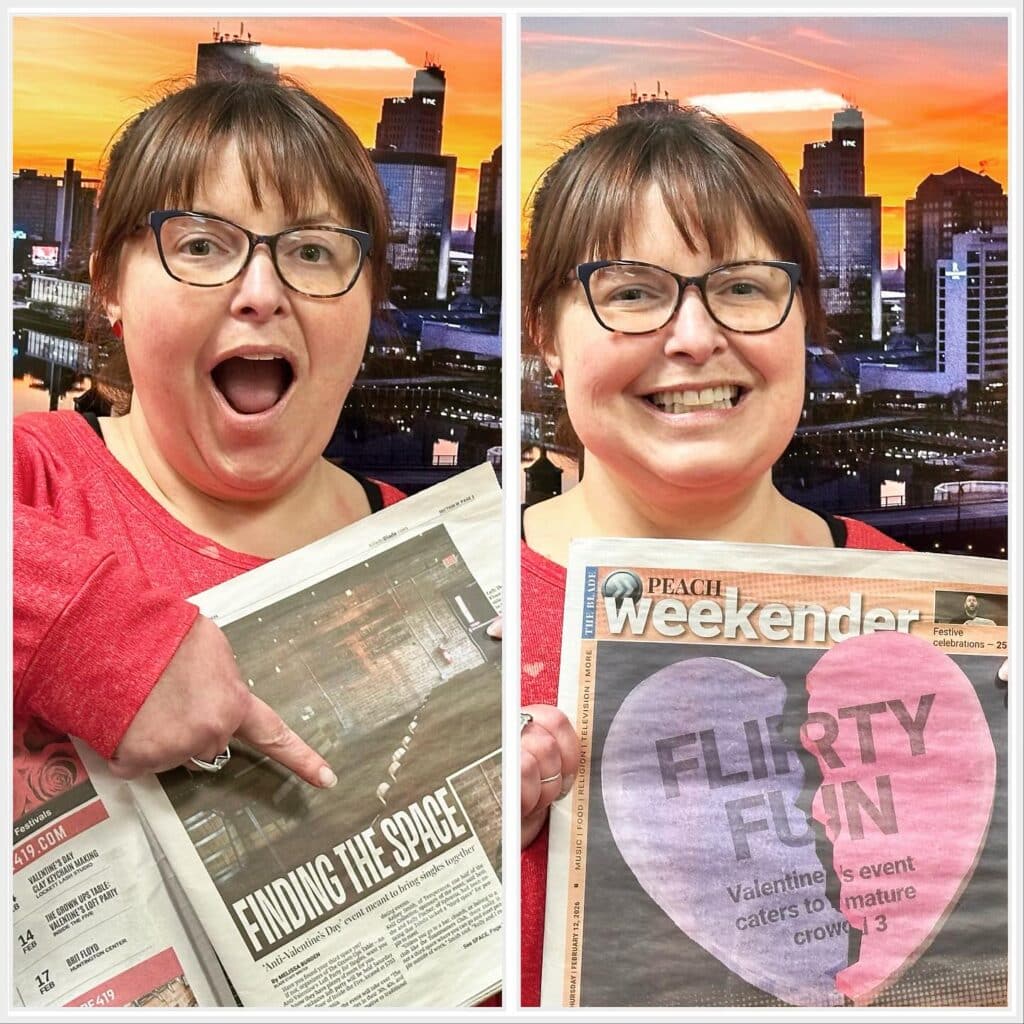
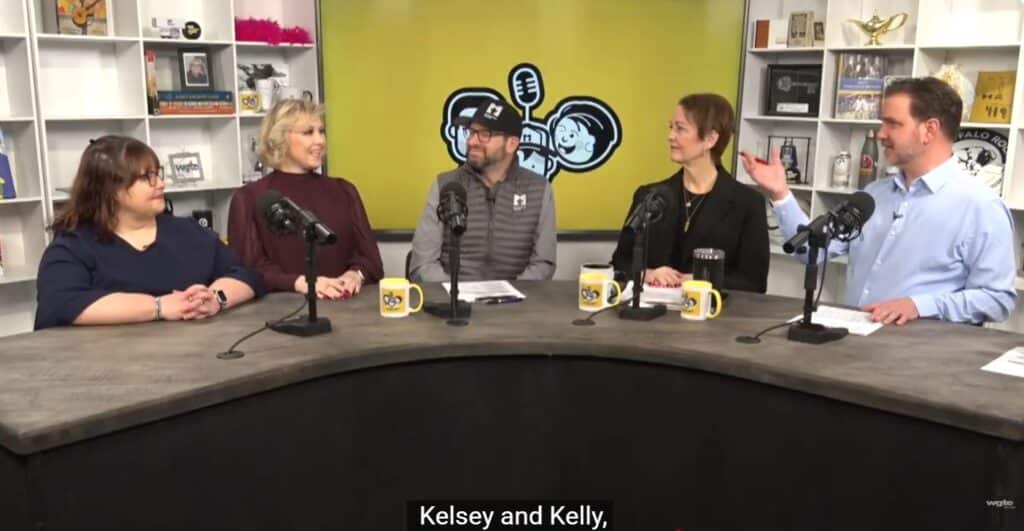
The transition from a podcast follow to a broadcast appearance was the result of a targeted pitch. On a quiet afternoon in January, I drafted an email to the team at “The Four Hundred and Nineteen Podcast Powered by WGTE.” I positioned The Kel² Collective as a response to the isolation many adults feel in the digital age. “We noticed a massive gap in the social scene for the 30-50 crowd—the ‘Village’ seemed to be missing,” I wrote to hosts Gretchen DeBacker, Matt Killam, and Kevin Mullan. The anti-digital hook provided the tension they needed. Within 24 hours, the invitation to appear on the Jan. 28 broadcast was in my inbox. Following that, on Jan. 27, Melissa Burden of The Toledo Blade reached out; her feature would land on the cover of the Peach Weekender on Feb. 12, just two days before our doors opened.
The Social Experiment in Action
The physical labor of building this “third place” began with Bryce Davenport, known professionally as DJ Davenport, hauling heavy equipment up the stairs. We traded the cold air of the hockey rink for the warm, amber lighting of the Fifth Floor, and the screaming fans for a room where the loudest sound was the clinking of Manhattan glasses. Alongside our volunteers—Aleshia Deiners, Heather Hurt, and Kolby Kocinski—we strategically arranged the room to spark “offline” connection: conversation-starter postcards, card games, and a neon heart.
We designed the “Ask Me About” nametags as a deliberate act of social engineering. They were pre-filled with nostalgic hooks like “The Prevue Channel” and “My Tamagotchi” to bypass the exhausting “What do you do for a living?” icebreaker. The wristbands served as a second signal: purple indicated relationship-seeking, pink indicated friendships-only, and rainbow indicated members of the LGBTQIA+ community.
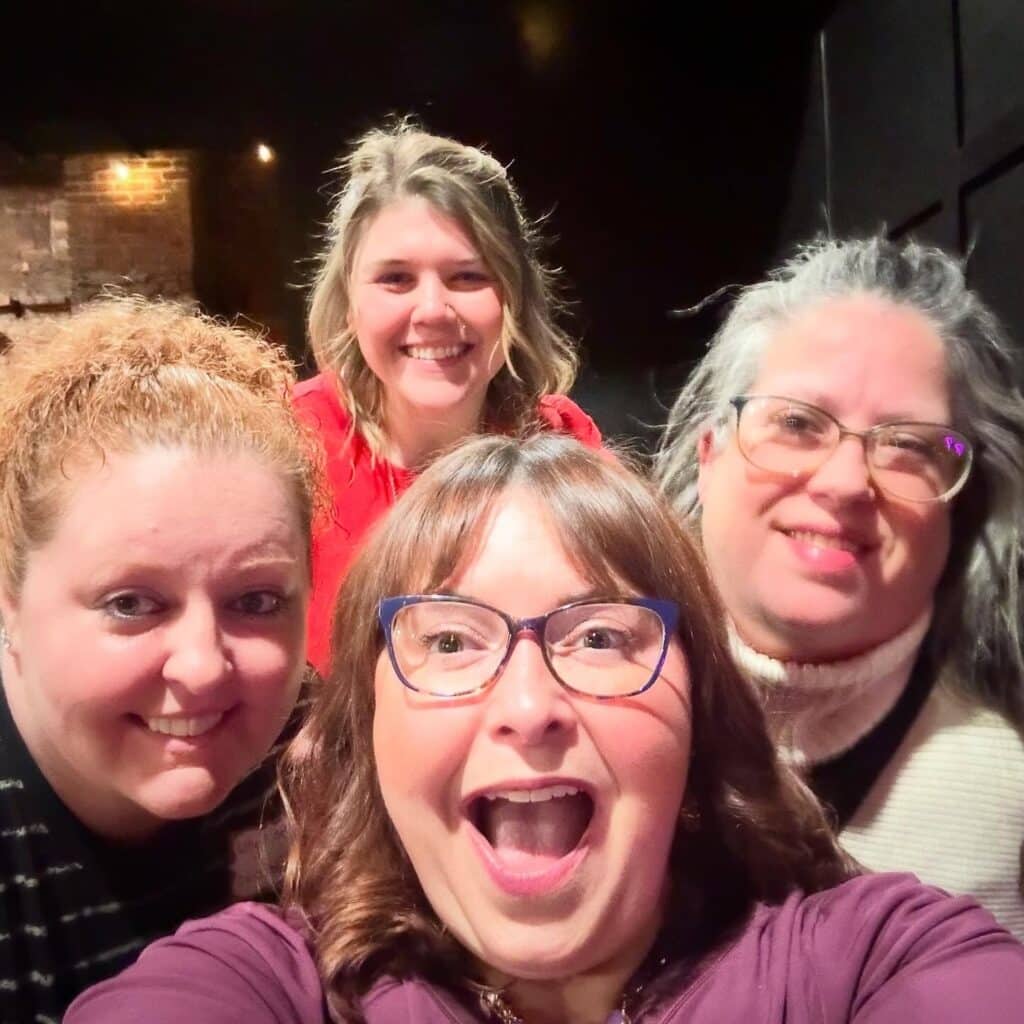
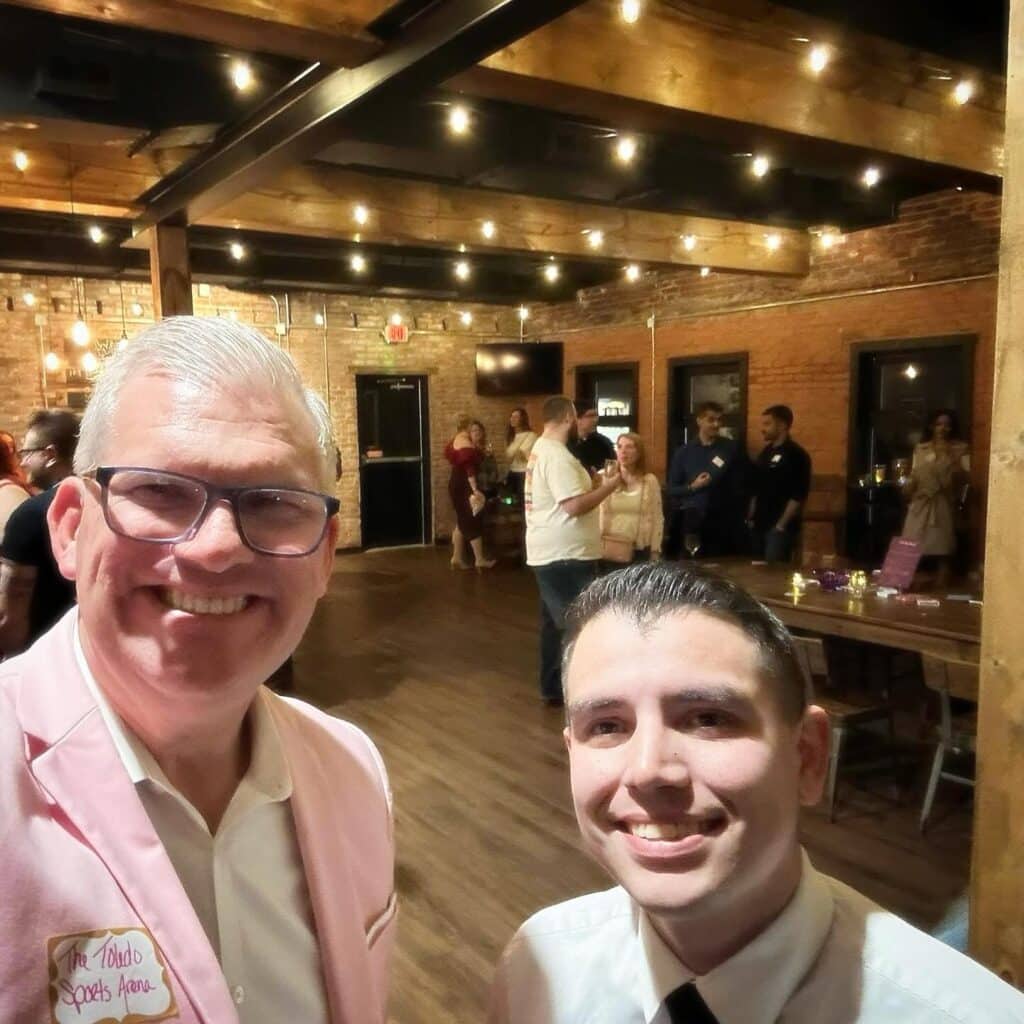
The doors opened promptly at 6 p.m. Immediately, the room filled with guests who gravitated toward the soft pretzel bites and chicken wings. Among the first arrivals was Mike Schwartz, a “Grown-Up” from Defiance who had reached out via email days prior. Having traveled specifically for the event, Schwartz was the embodiment of the movement. He even came prepared with his own “Ask Me About” nametag: “Travel + Amusement Parks.”
The final data from the evening revealed a telling split in the room’s intentions: 70% of the “Grown-Ups” opted for the purple wristband, while 30% chose pink. However, the most insightful feedback wasn’t found in the numbers, but in the nuance. Throughout the night, a significant number of guests expressed a desire to wear both colors simultaneously. This “double-band” phenomenon highlighted the specific social starvation of the 30-to-60 demographic. For many, the categories of “friendship” and “romance” are not mutually exclusive but are intertwined in the larger pursuit of rebuilding a social “Village.”
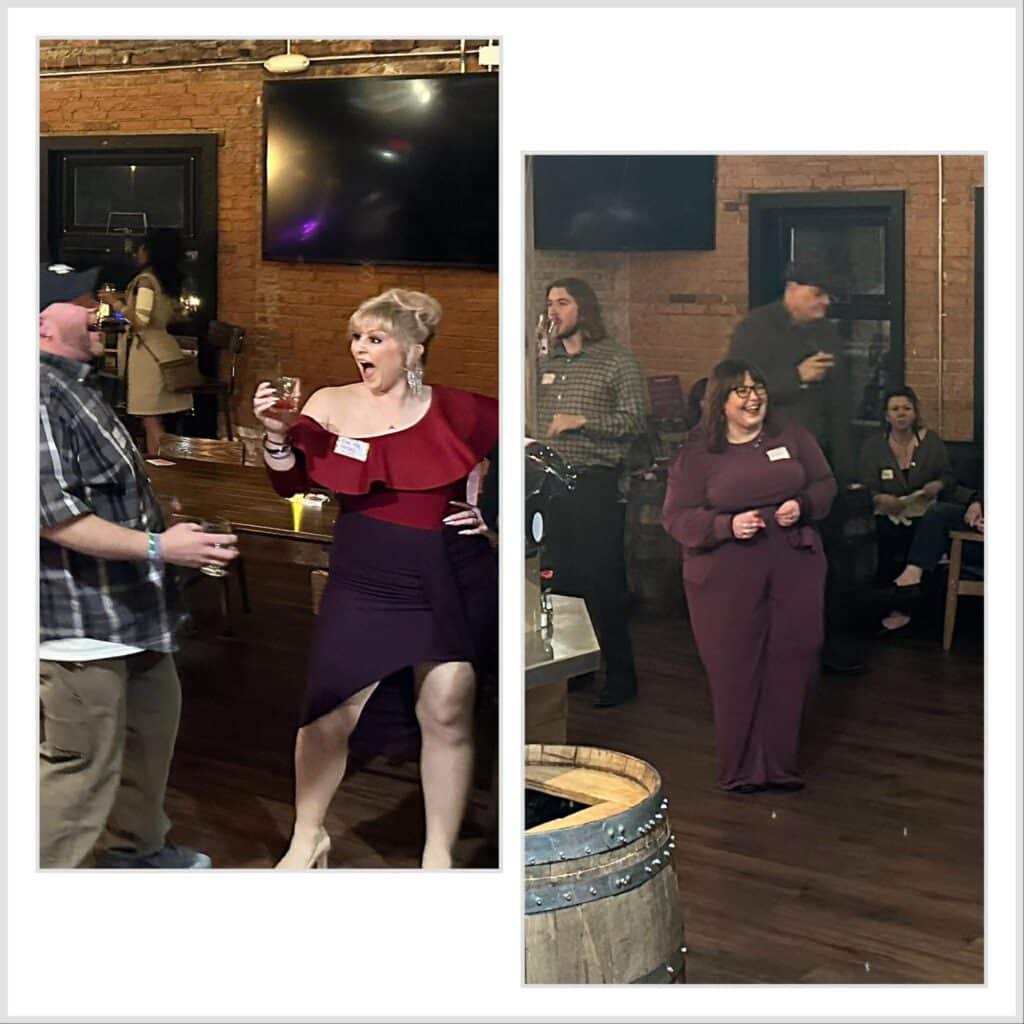
By 7:30 p.m., Croci took the microphone. By 8:15 p.m., the room hit a fever pitch with a game of “This or That?” Croci peppered the crowd with binary choices: “Text or call?” “Dogs or cats?” The room reached a crescendo with the ultimate regional divider: Ohio State versus Michigan. As the 1990s classic “The Choice is Yours” by Black Sheep played in the background, the room physically split. Finishing my first Manhattan, I stepped into the middle ground of the debate. It was a tactical move that gave the room permission to abandon the binary. Suddenly, the game wasn’t just about picking a side; it was about realizing that in a “third place,” the most interesting conversations often happen in the grey areas.
The climax of the night arrived through a collective exhaling of baggage during our “Trash Your Ex” game. As stories were read anonymously, the room transformed into a confessional. One “Grown-Up” shared a story of a partner who had their mother call to break up with them… after she cheated with the best friend. Another detailed an ex who wouldn’t drive three hours for a visit because he prioritized his cigarette budget over gas. The room erupted in solidarity when a woman shared she had co-owned a multimillion-dollar business with a partner who cheated with her best friend—an affair resulting in a pregnancy and a jail stint. For her pain, she was awarded two tickets to see Miguel in concert.
As the playlist finally faded, the results were tangible. While I wasn’t the one to witness the tactical exchange of digits, reports from our volunteers confirmed that at least one couple had bypassed the digital gatekeepers and swapped phone numbers the old-fashioned way. Nearby, Olivia Ott, a local real estate agent, chatted with Fischer about future collaborations. It was the “Village” coming back to life in real-time. We had fulfilled our mission. Standing in the now-quiet rustic room, the “caffeinated panic” of the afternoon felt like a lifetime ago. The Kel² Collective is already scouting its next “Third Place.”
AI Disclosure Statement
Generative AI (Gemini by Google) was utilized during the development phase of the “Sylvania Social” event to assist in brainstorming the event name (“The Grown-Ups Table”) and drafting initial marketing collateral. All final creative decisions, logistical planning, and the reporting and writing of this feature were performed solely by the author, with human oversight by co-founder Kelly Fischer. No AI was used to generate the final prose of this article or to fabricate factual reporting.
No responses yet